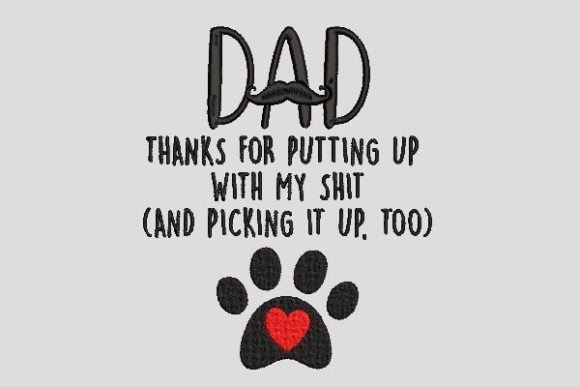
Dog Dad: A Designer's Review for Craft Fair Success
As an experienced embroidery designer who has spent countless weekends setting up booths at local craft fairs and managing a handmade shop, I know that the difference between a product that sits on a table and one that sells out by noon often comes down to the design itself. When I first laid eyes on the Dog Dad machine embroidery design, my mind immediately started visualizing it on various items for my upcoming weekend market display. This review is not just about the aesthetics; it is a practical breakdown of how this design performs in the real world of selling handmade goods.
The First Impression: Personality and Style
The title Dog Dad carries an immediate emotional weight. It is not just text; it is an identity badge for a specific type of customer who loves their pets unconditionally. In the context of our Family Quotes category, this design strikes a balance between modern minimalism and heartfelt sentiment. Unlike some overly ornate designs that can look dated quickly, "Dog Dad" feels timeless. It suggests a rustic yet clean aesthetic that fits perfectly into the current trend of farmhouse decor and casual chic.
For a craft fair seller, the vibe matters immensely. Does the design feel premium? Yes. Does it feel approachable? Absolutely. The simplicity of the phrase allows it to work as a bold statement or a subtle accent depending on where you place it. Whether your booth leans towards a soft, pastel color palette or a darker, more rugged leather-and-denim theme, this design is versatile enough to anchor the collection without overpowering the other items.
Product Potential: Where Dog Dad Shines
When preparing my table display, I evaluated where Dog Dad would stand out the most among tote bags, aprons, tea towels, patches, caps, small pouches, pillow covers, and giftable handmade items. Here is how it performs across key categories:
- Tote Bag Design: This is arguably the strongest candidate for sales. A canvas tote bag with Dog Dad embroidered in a contrasting thread color becomes an instant conversation starter. Customers love carrying their purchases, and a well-executed design on a sturdy bag signals quality. It works beautifully as a large focal design centered on the front panel.
- Apron Embroidery: For the home cook who happens to be a dog lover, an apron featuring this text adds a personal touch. Placing it on the chest area of a bib apron creates a professional yet warm look that appeals to buyers looking for unique kitchen gifts.
- Tea Towel Embroidery: Linen or cotton tea towels are high-margin items. The design translates well here, especially if paired with a simple border or placed near the hem. It photographs exceptionally well for online listings, which is crucial for Etsy sellers.
- Embroidered Patch: Creating a detachable patch from this file allows customers to customize their own gear. Patches are excellent low-cost add-ons that increase the average order value at a craft fair.
- Caps and Fabric Pouches: On curved surfaces like baseball caps, the design needs to be scaled correctly to avoid distortion. As a small accent on a fabric pouch or coin purse, it offers a cute, gift-ready option that is easy to produce in batches.
- Pillow Covers: For larger items, the design adds a decorative element that elevates the perceived value of the finished product. It turns a plain cushion into a statement piece.
Visual Appeal and Customer Attention
In a crowded marketplace, your product must grab attention within seconds. The Dog Dad embroidery file excels here because it speaks directly to the buyer's lifestyle. When customers walk past your booth, they scan for items that resonate with them. Seeing "Dog Dad" on a high-quality item triggers an immediate connection. It enhances brand consistency for any shop owner focusing on pet lovers, families, or handmade gifts. The design feels repeatable, which is vital for batch production during busy holiday seasons or major craft events.
Practical Selling and Production Notes
From a production standpoint, efficiency is money. This design is straightforward enough to allow for rapid stitching, but detailed enough to look custom-made. However, before running a hundred units, there are critical factors to consider regarding stitch density, thread colors, and hoop size.
If you plan to sell these as commercial embroidery products, you must ensure the design maintains clarity at smaller sizes. Tiny details can get lost if the hoop size is too small or if the fabric texture is too rough. For instance, on a thick terry cloth towel, the stitches might sink in slightly, requiring a heavier stabilizer to maintain definition. Conversely, on smooth denim, the design should pop beautifully.
Photography for your Etsy listings or social media is another key component. The contrast between the thread and the fabric is paramount. If you use a dark fabric, ensure the thread color is bright enough to be visible in photos taken under natural light. A poor contrast ratio can make a great design look muddy in a digital mockup, leading to lost sales.
Design Assets and Commercial Use
It is important to remember that this is a digital embroidery file. While the description mentions multiple formats compatible with various machines, you must verify the specific file types (such .pes, .dst, .exp) before purchasing to ensure they match your equipment. Additionally, always confirm the commercial licensing terms. If you intend to sell the finished physical products, you need the right to do so. Do not assume all files come with commercial rights; check the license agreement provided with the Dog Dad design assets.
Real-World Testing: Before You Sell
Never skip the test run. Even the most experienced designers start with scrap fabric. Here is my checklist for preparing the Dog Dad design for market:
- Test on Scrap Fabric: Run the design on the exact same material you intend to sell. This reveals how the fabric reacts to the needle and thread tension.
- Check Thread Contrast: Ensure the chosen thread colors provide enough contrast against the final product color. Test both light and dark threads if possible.
- Review Spacing: Verify that the design fits comfortably within your hoop size without cutting off edges. Pay attention to the placement relative to seams or hems.
- Inspect Stitch Density: Look closely at areas where stitches overlap. High density can cause puckering on thin fabrics, while low density might look sparse on heavy materials.
- Use the Right Stabilizer: Choose a cut-away or tear-away stabilizer based on the fabric weight. For stretchy knits, a cut-away is usually necessary to prevent distortion over time.
- Create Real Mockups: Don't rely solely on digital images. Create at least one physical sample to photograph. The texture of real embroidery cannot be fully replicated in a printable mockup.
- Compare Fabric Colors: Different shades of white or black can affect how the thread looks. Test on the actual inventory you have on hand.
Handling Difficult Materials
Be cautious when working with textured towels or dark fabrics. Textured surfaces can hide the intricacies of the stitch pattern, making the design appear less sharp. Similarly, on dark fabrics, you may need to adjust the underlay stitches to ensure the top layer of thread stands out clearly. If the design includes tiny lettering, test it at its intended size. Sometimes, what looks perfect on a computer screen loses legibility when stitched onto a curved cap surface or a small pouch.
Final Thoughts for the Creative Entrepreneur
The Dog Dad embroidery design is a strong contender for any craft fair or handmade market. It hits the sweet spot of being relatable, stylish, and commercially viable. Whether you are an Etsy seller looking to expand your catalog or a boutique maker wanting to offer unique small shop products, this design has the potential to drive engagement and sales.
By following proper testing protocols and understanding the nuances of fabric texture and stabilizer usage, you can ensure that every finished product reflects the high quality your customers expect. Remember, the success of a craft fair product lies in the details—from the initial design choice to the final stitch. With the right preparation, Dog Dad can become a standout item in your booth, turning casual browsers into loyal buyers.