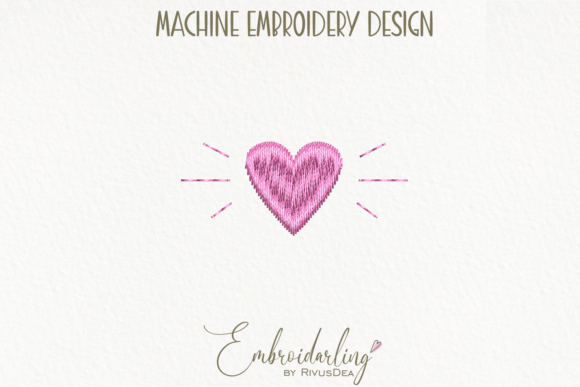
Tiny Heart: A Designer's Review for Craft Fair Success
As an experienced embroidery designer, I spend a lot of time evaluating designs not just for their artistic merit, but for their commercial viability. When I first encountered the Tiny Heart design, my immediate thought was not about the stitch count or the file format, but rather how it would perform on a crowded craft fair table. The product description notes that this design exudes subtle sweetness and captures the essence of affection through a petite, delicate form. In the world of handmade goods, simplicity is often the most powerful selling point, and Tiny Heart fits perfectly into that category.
The First Impression: Minimalist Charm Meets Market Appeal
When you look at Tiny Heart, you are looking at a design that prioritizes elegance over complexity. It does not scream for attention with loud colors or intricate patterns; instead, it whispers to the customer with a soft, romantic vibe. For an Etsy seller or a boutique maker, this distinction is crucial. In a sea of bold, colorful, and busy machine embroidery designs, a small, clean heart stands out because it feels premium and intentional.
This design falls squarely into the "modern rustic" or "farmhouse chic" aesthetic that continues to dominate the handmade market. It is versatile enough to work on a variety of surfaces without overwhelming them. Whether you are creating a tote bag design for a weekend market or adding a personal touch to a kitchen towel, Tiny Heart offers a level of sophistication that appeals to buyers looking for quality over quantity. It is a shape that says, "I care about details," which is exactly what customers want when they purchase a handmade product.
Strategic Product Placement for Maximum Sales
Imagine setting up your booth for a local craft fair. You have a limited amount of space, and every item on display needs to work hard to sell. Where does Tiny Heart shine in this scenario? My experience suggests that this design excels as an accent piece rather than a focal point. It is perfect for items where the customer expects a touch of personality without a massive visual block.
- Apron Embroidery: Placing a delicate heart near the pocket or hemline of an apron creates a charming, functional gift. It adds a pop of warmth to a utilitarian item, making it an ideal choice for home cooks who appreciate aesthetics.
- Tea Towel Embroidery: This is perhaps the highest volume seller for small shops. A single Tiny Heart stitched in a contrasting thread color on a white or linen tea towel looks incredibly clean and professional. It photographs beautifully for online listings and appeals to those who love farmhouse decor.
- Embroidered Patch: Converting this design into a sew-on or iron-on patch opens up a whole new revenue stream. Patches allow you to add value to hats, backpacks, and denim jackets. The simplicity of the heart ensures it remains legible even when scaled down slightly.
- Fabric Pouches and Small Accessories: For makers selling coin purses or makeup bags, Tiny Heart serves as a delightful detail. It elevates a basic canvas pouch into a thoughtful gift set.
While it works well on pillow covers, be mindful of the scale. On a large cushion, a tiny design might get lost unless repeated in a pattern. However, for a small throw pillow or a decorative accent square, it is a winner. The key is understanding that Tiny Heart is best used to enhance a product, not to dominate it.
Production Practicality and Batch Efficiency
For the creative entrepreneur running a small shop, time is money. One of the biggest advantages of the Tiny Heart design is its efficiency. Because it is a simple shape, it likely requires less stitching time than complex floral arrangements or detailed lettering. This allows you to produce more units in less time, increasing your profit margins.
Furthermore, this design is highly repeatable. You can create a cohesive collection by using Tiny Heart across different products. Imagine a matching set: a tote bag, a tea towel, and a cap, all featuring the same subtle heart motif in varying thread colors. This consistency strengthens your brand identity and makes your booth look like a curated collection rather than a random assortment of items.
From a photography perspective, this design is a dream. When creating a printable mockup or taking photos for your Etsy listing, a small, clean design captures light well and looks sharp on screen. Customers scrolling through their phones need to see the detail clearly, and the lack of dense, chaotic stitching ensures that the image remains crisp even on mobile devices.
Critical Considerations for Commercial Embroidery
While Tiny Heart is a strong contender for your inventory, a professional approach requires careful planning before you start mass production. As an experienced designer, I always advise testing the design on scrap fabric first. This step is non-negotiable for ensuring quality control.
You must pay close attention to stitch density. Even though the design is small, if the fill stitches are too dense, the fabric may pucker, especially on thin materials like cotton voile or lightweight polyester. Conversely, if the stitches are too sparse, the design may lose its definition. Always check the thread contrast against your chosen fabric. A white heart on a cream background might disappear, while a navy heart on a black shirt could look muddy. Selecting the right thread colors is essential for the design to pop.
Another vital factor is the hoop size and stabilizer selection. For a design described as "petite and delicate," you do not need a large hoop, but you do need stability. Using the wrong stabilizer can cause the tiny details to shift during the stitching process. If you are working on textured towels or curved cap surfaces, the tension must be adjusted specifically for those challenges. A design that looks perfect on a flat test sample might fail on a curved hat brim if the digitization does not account for the curvature.
Be cautious with dark fabrics. While a bright heart might stand out, a delicate design can sometimes struggle for clarity on very dark or heavily textured materials. If you plan to sell finished products on these fabrics, ensure you have tested the visibility first. Additionally, verify the commercial licensing terms before selling any items made from this digital embroidery file. Understanding your rights is just as important as the design itself.
Final Verdict for the Craft Fair Seller
In conclusion, Tiny Heart is a smart investment for any business owner looking to expand their commercial embroidery offerings. It strikes a perfect balance between aesthetic appeal and production practicality. It is the kind of design that customers notice immediately because it is so cleanly executed, yet it is subtle enough to fit into any home or wardrobe style.
Whether you are a seasoned pro or a new Etsy seller, incorporating this design into your line of small shop products is a strategic move. It allows you to offer high-quality, personalized gifts that feel special without requiring hours of labor per unit. By focusing on the right applications—like aprons, totes, and patches—and paying attention to the technical details of stabilization and thread choice, you can turn this simple shape into a best-selling staple for your booth. Remember to create at least one real mockup to visualize the final result, and you will find that Tiny Heart has the potential to become a signature element of your brand.